Creativity and Imperfection
I spend a lot of time comparing myself to people who are doing these same things, but much better than I am.
I don’t know if you guys know this, but sometimes I write a bunch of blogs in advance and schedule them all to come out over time. I like to work on things in real time, but there are just some months of the year when life piles up around me and it’s easier to have one less thing to worry about in between the school breaks and book projects and orthodontist appointments.
I’ve just finished one of those months. There were a lot of planned projects as well as unplanned surprises (leaking sink! broken toilet! pet illness!). But here, at the end of it, it’s a relief to be able to sit down at my table with nothing more pressing to do than write. It’s funny, writing. In the right mood, at the right moment, I can produce thousands of words a day and they’re good. Maybe not great, but they make sense and have a point and are mostly grammatically correct.
In the wrong mood, when I’m stressed or being interrupted too much? There’s no point in even trying. I’m better off just taking a nap. Back when I used to write grants for a living, I always, always wrote first thing in the morning. After lunch, my brain was fried for that type of creative work and so I spent those hours doing budgets or research or even just filing and organizing. At the time, I felt so bad. I was only useful for half my day! They were paying me and I could only write for 4 hours at a time!
Now that I’m older, I’m astounded that I was able to write productively for even that long without a break. There is such a difference between production and analysis. Even when it comes to edits - I can do a full 8 hours of revision. But after about 2-3 of writing, my brain becomes total mush.
Part of aging, for me, has been accepting my limits. I am told that I was a pretty malleable child. That all changed at some point, but I can see how that would have been true. Even now, I want to be living up to the expectations that others hold for me. I want to be the person who can work for 10 hours a day and then be an amazing mom and also a good friend and also run marathons.
But my body and brain won’t let me. And it turns out that those expectations were never based in reality anyway. All the stories we hear of amazing people doing amazing things? They’re doing one, maybe two, amazing things. Don’t get me wrong, they are doing it with excellence. But they are not doing all of the things perfectly all of the time.
I have had the luxury of choosing what kind of life I want to live, and that looks like doing lots of things imperfectly. I get to be a mom, imperfectly. And a writer, imperfectly. And a community member, imperfectly. And a gardener, imperfectly. So, I spend a lot of time comparing myself to people who are doing these same things, but much better than I am. Their books come together faster or their kids are always wearing matching oufits or their gardens look like showpieces. I’m learning to accept that the person that I am? She writes when she’s not too busy doing all the other things and she does all the other things when she’s not too caught up in her writing.
Maybe I’m the only one, but I have a feeling that a lot of people feel the same. The complexity that they desire can’t be contained in a relentless drive for excellence. Maybe they don’t want to be chased by expectations anymore, but rather be drawn by curiosity and fascination. And yes, yes, dinner has to be cooked and mortgages paid…but in the other moments, in the quiet weeks, maybe there’s room for some creativity.
Tomatoes
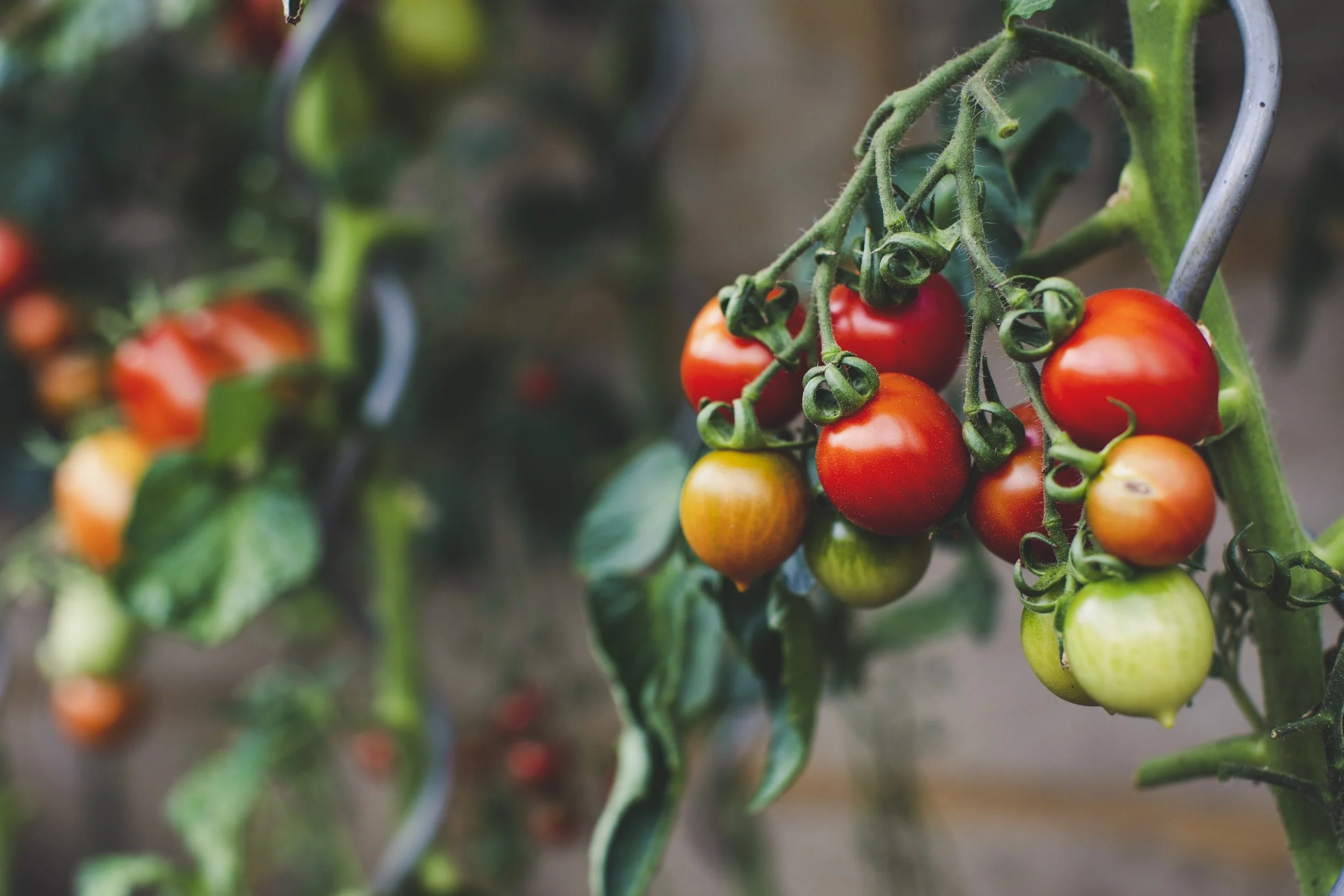
It feels a bit like failure for some reason, admitting that I am simply not up to processing 15 tomato plants’ worth of produce.
It has been a truly overwhelming month around here and yesterday, I found myself with my first really quiet day in a long time. Part of me wanted to just sit and stare at a wall for an hour or two, but instead I did some planting. We’re still holding off on starting the plants that need really warm weather, since last year the sun didn’t come out until July, but for the first time in a long time, I’m going to have to make room for tomato starts.
I have a love/hate relationship with tomatoes. I like the way they taste and they are useful in so many dishes. Plus they’re easy to preserve as sauce or salsa. But they always ripen at the time of year when I’m out of energy, those long August days before the kids go back to school but after they’ve run out of ways to entertain themselves. Usually at that point, the last thing I want to do with my quiet moments is go wade through bushy tomato plants and harvest them, just to have to figure out what to do with them before they go bad.
And, to make it worse, I always miss one or two so that if I try to rotate my beds the next year, I’m picking out tomato plant volunteers left and right. And to make it even worse, the last time I started tomatoes inside, I didn’t have room for all of them in one bed and wanted to compost the rest, but Forrest couldn’t bear the waste and planted them in our flower beds instead. Our flower beds!
All of that to say, I’ve spent the last few years just tending whatever volunteers come up and mostly ignoring them. But this year, I’m giving up on having a dedicated raised bed for tomatoes and just putting them in containers in my backyard. It feels a bit like failure for some reason, admitting that I am simply not up to processing 15 tomato plants’ worth of produce. Capitulating to the fact that while I love planting the things and enjoy tending them, the whole canning/preserving side of gardening just isn’t my jam. (Pun intended.)
I think part of that is because to me, the appeal of gardening is that I get to be outside. I get to enjoy the most beautiful part of the year in a way that is both peaceful and satisfying. The idea of taking some of our short summer and spending it over a stove in a hot kitchen? No, thank you.
There’s something about living where we live - life is so indoors for so much of the year, that when it gets nice, we do everything outside. Our yard has various stations so we can follow the shade around throughout the day - Adirondack chairs on our shade deck, outdoor couch on the grotto, hammocks in the girls’ garden. It all sounds very fancy until you realize that our shady retreats are interspersed with the messiness of life with kids - a discarded art project on the deck, an unraveled hose sprawled across the yard, and lots and lots of ratty dog toys.
And now, we’ll be adding some pots of tomatoes to the mix. Hopefully they’ll be pretty, but knowing me, I’ll just grab whatever old plastic buckets I’ve got to hand and make it work. And we’ll grow as many tomatoes as we can eat (and hopefully not many more than that!). And I’ll give up on one dream of maximum tomato production in exchange for another dream - a lazier, more relaxed dream of sun warmed tomatoes and kids eating them off the vine.
My Ceiling, Their Floor
I’m sure at the end of it all, they’ll come back and show me how I should have been doing it differently all along. And they’ll be right.
My eldest daughter is a true introvert, someone who comes alive with her chosen people, but otherwise is reasonably content to sit quietly thinking her own thoughts. When she was a toddler, if she got too lost in her thoughts, she would forget to sit up and fall right out of the chair she was in. Even now, if we’re in the middle of a conversation and I make an interesting point, she’ll fall silent, eyes glazed over, as her brain races over the many implications, deciding whether or not she agrees with me.
Many times she doesn’t. And as the two youngest get older, they also have their own opinions. It’s been fun, watching them have their own approaches to life. The other night, we were talking about how some people, when someone tells them they can’t do something, no matter how mundane, they just have to try. I wryly noted that we had a little of that in our family. One of the twins protested, “No, I don’t!” and I responded, “I’m not talking about you.” The other simply smiled and chuckled. She knows herself.
It's not always easy, though. There are moments where I want to say, “Because I told you so.” But these are Forrest’s children, and he’s been training them on using logic and testing arguments since the day they could talk. There is no logical hole that my kids cannot find. My eldest, sweet soul that she is, usually finds the fault in my thinking but doesn’t point it out unless she has to. The younger two, however, delight in getting one over on Mom.
I’m told that they’re respectful at school which is the most important part to me. Still, there are moments where I wish they believed in my wisdom a little bit more. I know it’s the age, and more than that, it’s a necessary part of development. They have to differentiate themselves from Forrest and me, figure out all the little ways where they don’t want to do something the way they’ve been taught. They need to become their own people, not simply little pieces of our family. And I love that for them. I want them to become those people, grown up and mature.
But oh, it’s so hard. Sometimes I still want them to be little babies who look to me for answers. I don’t want them to disappear off on their own to just figure it all out themselves. These days, when they ask for advice, we end up having an hour long discussion about whether or not my advice will work for them. They’re right – I don’t know everything and they are experts on what it’s like to be a tween these days. But it was nice back when they thought I was the be all end all.
It’s only going to get worse from here. I’m lucky that they still try to see my perspective at all. I’m sure there are a few years coming up where I won’t even be able to say good morning without being told it’s actually a terrible morning and why did I ever think otherwise? And then I’m sure at the end of it all, they’ll come back and show me how I should have been doing it differently all along. And they’ll be right.
I both long for and dread that moment where they shine the mirror back on me. I once read a book by Hilary McBride about mothers, daughters and body image. It was fascinating, and she interviewed a lot of mothers who didn’t like their bodies, but had somehow taught their daughters how to accept their physical flaws. The author summed up by saying, “We strive so that our ceiling can be their floor.” I wept over that page. We all work so hard to be better so that our kids can start at the place where we could only just reach. All the parenting books, all the therapy, all the hard work to be more patient, more kind, more thoughtful – it’s for me, yes, but mostly it’s so that they can take what I have only just learned and build on it.
If the price I have to pay for that is that they come back and try to drag me forward? I’d gladly pay it a thousand times over.
Book Announcement!
I don’t know if this is how it’s all supposed to work, but I know for me right now, this feels like the right way to release this book.
Do you ever flit in and out of a book, picking it up for a chapter or two between other novels? I’m still working my way through a book of essays by Madeline L’Engle, even though I’ve probably finished 6 books since I started it. She’s a remarkable writer, of course we all know that, but I’m enjoying her humility more than anything else. In our world of self-promotion and striving, her accurate sense of her own importance is refreshing. It feels, in some ways, anachronistic, until I remember that Lord Byron and Ernest Hemingway floated their way around the world full of hot air and bravado. There’s nothing new about ego.
It's hard for me to contemplate doing so many of the things that I’m told need to be done to achieve success. Not the networking and relationships, I do that for fun. But the constant, constant demand to be out there – pithy and poignant, always directing the conversation back to myself and my work. I find the whole idea of it exhausting.
It’s en vogue right now to find that self-promotion to be morally repugnant, but I don’t see it like that. I come from a long line of people who are charming, funny, and can talk themselves both into and out of trouble. Sometimes you just have to go for what you want, and sometimes that means that you make sure that the person you’re talking to remembers who you are. It would be a little rich for me to condemn influencers when we all talk about P.T. Barnum as though he’s anything different.
But that’s not me. I want to communicate my thoughts clearly and memorably, and after that, I’d mostly like to be left alone to read or chat or snuggle with my cat. This isn’t to say I don’t have a big ego. I’m constantly taking on projects that I can’t possibly complete because of course I can figure it out! And you would think that getting in this many scrapes would dent that sense of competency, but nope. I just mostly don’t want to share that ego with other people. It’s too much work.
So when I think about self-publishing, I don’t stress about getting the book finished or completed. I stress about getting the book out there. And every author’s guide tells me to suck it up. Success depends on selling myself, depends of buying a hundred copies and going to every bookstore and convincing them to put my book on the shelves, depends on hammering on a door until it opens.
Maybe that’s true. I often find myself outright refusing to do something and then, in the end, coming back around to the idea. But when I think about success, all I want is for people to read the stories I write. Authors don’t make any money anyway (they really, really don’t). So, I’m going to try something different with this book. Let’s just say that this is my turn to bow to my ego.
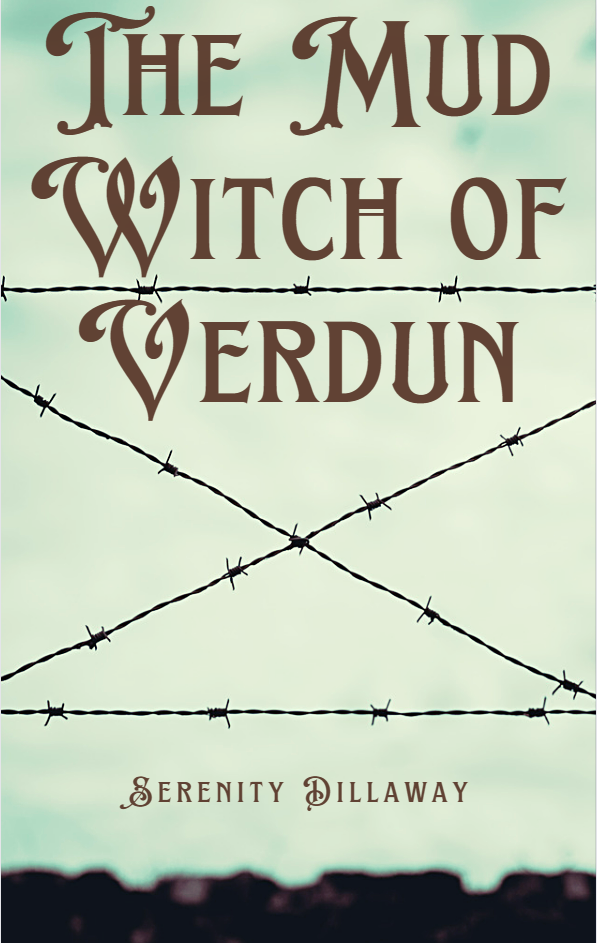
I’m going to release my new book, The Mud Witch of Verdun, via Amazon Publishing, on April 15th. You’ll be able to buy it on Kindle or in paperback and read it to your heart’s content.
But, at the same time, I’m going to be really, really old fashioned, and release this book, bit by bit, over the next 6 months. It’s called serialization and it was all the rage back in the day. So, three times a week, I’m going to put up a section of 1,000 or so words, and in the end, the book will be available for free if you’re willing to click through. And if you want to speed ahead, you can always hop over to Amazon to buy it. Either way, my goal is that this story gets out there.
I don’t know if this is how it’s all supposed to work, but I know for me right now, this feels like the right way to release this book. I loved writing it so much that I even loved editing it! The story and characters made me laugh and cry and I hope that you will enjoy reading it. There’s a few more weeks of tweaks and changes that need to be made but in the end, I think it will be more than worth it.
While I’m releasing the book bit by bit, I’m going to ease off regular blogging for awhile and work on the stubborn manuscript that’s been on the back burner. I’ll pop back in when I can, of course!
I’m so excited to share this project with you all. I have been so bolstered by this blog and all of you wonderful readers. So, mark your calendars for April 15th. I can’t wait!
Construction and Coziness
When I was a kid and read Mrs. Piggle-wiggle, I didn’t want to be one of the other children. I wanted to be her – the old woman with the upside-down house and backyard full of buried treasure.
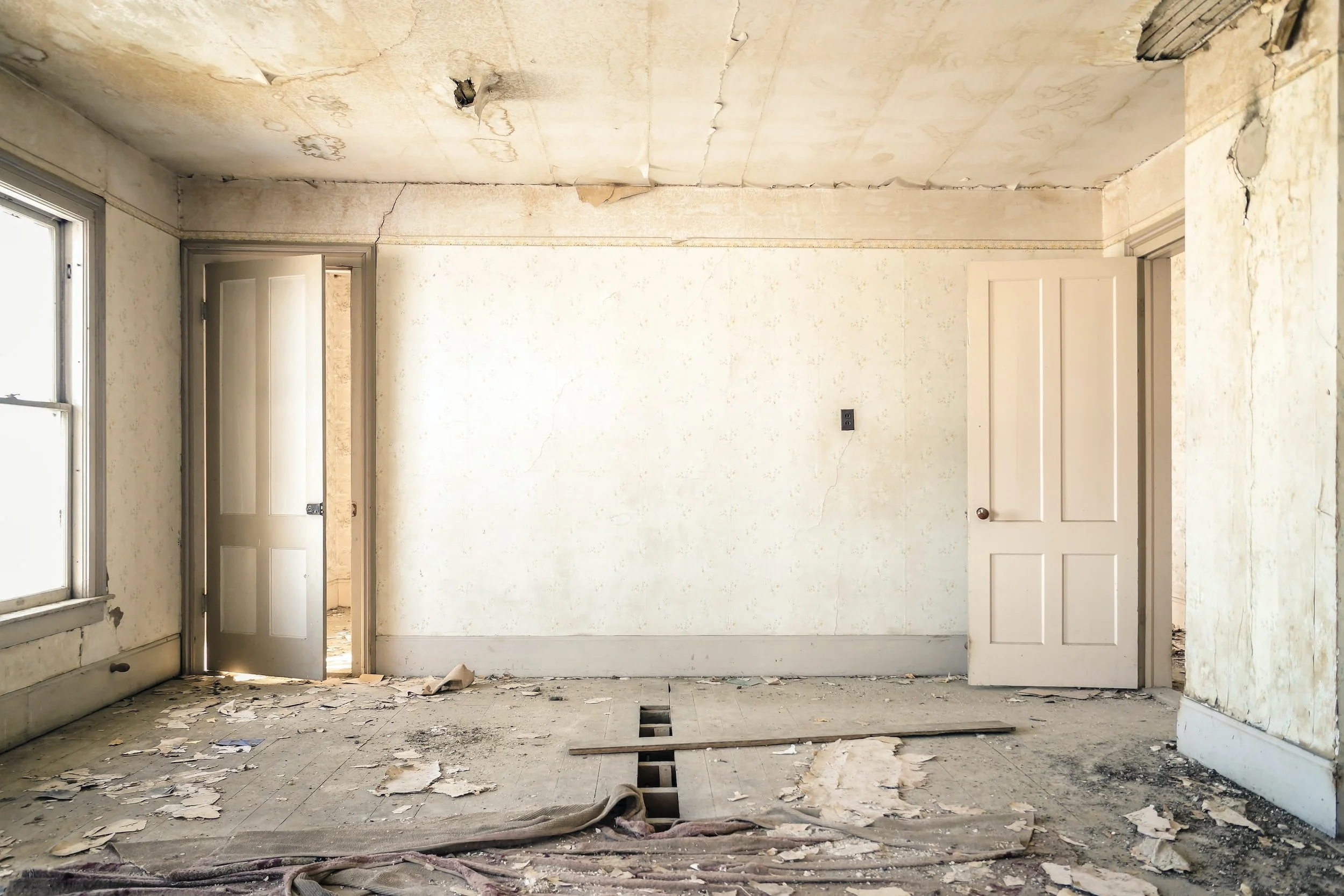
We have been having our carpets replaced for the last two days now and while I am so, so thankful to be done with the old, stained rugs, having our entire family stuck in our kitchen/dining area has been a bit cramped, to say the least. As I write this, I have one dog on either side of me and Forrest is sitting a few feet away trying to work with a cat on his lap. The girls arrive home from school in a few minutes and I am not emotionally prepared for another afternoon where we all spend every. Single. Second. Together.
Scratch that. Forrest got up and now the cat is on my lap.
I love our crazy full house, the chaos and the noise and the intensity of it. I know what my kids are up to most of the time because I can literally hear them from pretty much every room. When I was a kid and read Mrs. Piggle-wiggle, I didn’t want to be one of the other children. I wanted to be her – the old woman with the upside-down house and backyard full of buried treasure. I like to think I achieved it in spirit if not in reality. The house is right side up, but I can guarantee that if a bunch of kids tore up my backyard, they’d probably find a lot of stuff, some of it reasonably valuable. I know that because for some birthday party or other, I threw ten bucks worth of quarters into a pile of hay. It was the best kid distraction I’d ever seen.
But, on days when the girls are tired from school and the animals are riled up from strangers in the house and Forrest is annoyed at having to work from the dining room, there’s a part of me that remembers that Mrs. Piggle-Wiggle lived alone. Alone! It’s been so long that I can’t even imagine it. I wish I could just dip my foot into the old days for a few hours – to a crappy apartment that was just how I liked it, and that most important of all, stayed clean when I cleaned it.
My family is so, so good about housework; I really can’t complain. But there is the subtle drift of stuff from one place to another, a slow slide toward entropy that exhausts me. One moment the counters are clear, the next, there’s the remainders of an art project, a dirty teacup, and for some reason, a rock that has to live inside my house. I keep finding the electric pencil sharpener, plugged in, lying on the couch. Why? Why?!?
There’s a good reason for all of the detritus, I’m sure. And I am mostly good natured about it, because I know that the clutter is the evidence of lives being lived. I want my kids to do art projects and have tea parties and love the outdoors so much they bring it in. I like that they feel comfortable enough to hang twinkle lights on the wall for no good reason, just to make the house more fun. I hope that when they grow up, they will realize that our possessions are there to serve us, not the other way around.
So, this afternoon, we’ll all get very cozy and wait out the construction zone. And in a day or two, God willing, we’ll be able to stretch our legs once again, in a house that’s just the right size for us.
Decisions and Demands
In our family, we believe helping kids learn how to make good decisions is our number one priority. And most of learning to make good decisions is making bad decisions.
We’re having our living room carpet torn out today. It’s old and worn and very stained and I’m tired of dealing with it. So we’re putting in laminate. It seemed like a no brainer, so I was surprised to find my youngest laying on the floor last night, weeping about how much she’s going to miss it. I gotta admit, I did not have that one on my parenting BINGO card.
I like that they can express their opinions, but I spend a lot of time trying to reflect back to them the realities that they’re expressing. Yesterday, one of my daughters was lamenting that Forrest and I don’t push them into more activities. We don’t. They’re required to fulfill any commitments they make, but once the sports season is over, if they want to quit, they can quit. She was saying that she wished we made her do more things, that we overrode her objections and decided what was best for her. It would be so much easier for her, if we would just make her do things whether or not she wanted to.
Whew. She’s not wrong, of course. With my willpower and Forrest’s energy, we could have forced our kids to become all sorts of amazing things. They could be well on their way to sports scholarships or national math competitions. I have no doubt of that.
But we only pull out the parental dictatorship when it comes to school, chores and health. Everything else is a choice. It’s hard to hear my child push back on our values in this way. But as we talked, I helped her to see that in our family, we believe helping kids learn how to make good decisions is our number one priority. And most of learning to make good decisions is making bad decisions.
I want my kids to experience lots of regret for their childhood choices. That sounds awful, but hear me out. I want them to splurge on the stupid plastic toy and regret the purchase. I want them to refuse to do their chores and regret the cancelled outing. I want them to procrastinate studying for the test and regret the bad grade. I want them to quit a sport in a fit of pique and regret missing out.
Because when they’re a grown up, I don’t want them to do things they’ll regret. They will, of course, we all do. But it’s a lot easier to deal with the regret from a failed test in 5th grade than a failed project in their first job. I want them to get as many bad choices out of the way as possible.
So, no, I don’t make them do things they don’t want to. I don’t substitute my judgment for theirs unless I really, really have to. It’s all a gamble, I know that, and I worry that we’re emphasizing the wrong things. I worry that they’ll take away the wrong lessons or that the regret from a bad decision will turn to resentment. I worry that they’ll hit 35 and wish that I had forced them to go outside and play catch in the rain even though they complained.
But I tell myself that they can use those beautiful logical brains to make new choices too. I hope they’ll learn from my mistakes and see how even a full-grown woman can stop, take stock of where she is, and change her mind. I hope against hope that they will see all of the times Forrest and I screwed up and realize that there are very few irredeemable choices. There’s always time to take up a new career, let alone a new hobby.
I think that we’re often given the message that life is short so we should take advantage of it. But if I had one thing I wish to express, it’s that life is long. There are so many chances to reinvent ourselves. We do not have to pack everything into childhood or adolescence. And there are so many years to learn and grow.
Maybe they’ll disagree. Maybe in a decade they’ll come home from college and tell me all the things I did wrong. In fact, they definitely will. And then, I can only hope that we all find a way to stop, take stock of where we are, and move in a new direction again.
Lost in a Good Book
It’s a hard thing, making a book hard to put down. A lot goes into it – pacing, chapter breaks, plot twists – and as a reader, we usually don’t notice unless it’s done badly.
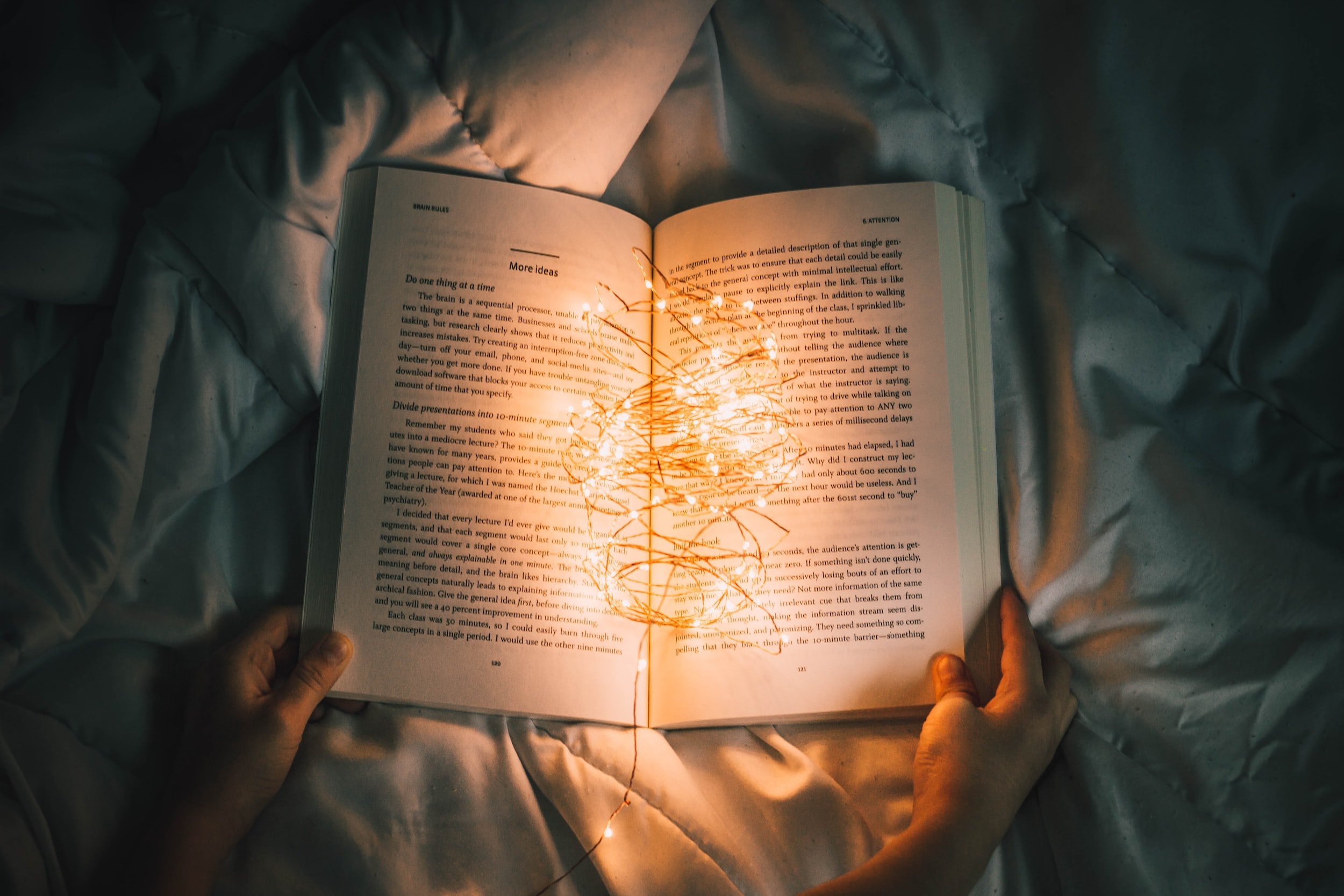
I have to confess, I’d rather be reading right now. I’m in the middle of a total beach read, a fun little book by Sophie Kinsella, and I feel like I’m back at my first job right now, because all I want to do is get to my lunchtime so I can read for a half hour. There’s this great old song by Ben Folds where he’s singing about how he has to finish one more song for his album and usually he tries for excellence, but he’s newly in love and just wants to get it done so that he can get back to his new girl.
This is like this, except not love, just a book that’s a little bit too addictive. It’s a hard thing, making a book hard to put down. A lot goes into it – pacing, chapter breaks, plot twists – and as a reader, we usually don’t notice unless it’s done badly. Then, it feels like every time we approach the end of a chapter, someone is professing love or falling off a cliff or being revealed as a secret spy. After a while, it gets a little tedious and more than a little unbelievable.
Done well, however, and I find myself awake at one a.m., ignoring my sensible self, saying “Just one more chapter,” over and over. Prose is usually pretty accessible to me. I notice characterization and foreshadowing and themes and all that, and I can tell when it’s being done well or badly. Except when a book hits that addictive spot. Then it’s like I’m bewitched. I don’t even know it’s happening until I my stomach rumbles because it’s been 7 hours since dinner and I realize I really do need to get to sleep.
On the other hand, poetry always feels like magic to me. I’m not a poet so the idea that you can convey meaning not only with the words but the rhythm, the sound, the feel of the words – it’s as close to enchantment as I think I can get. Not every poet hits me the same way. Shakespeare is a slog and I find T.S.Eliot frankly confusing. But Emily Bronte haunts me and I find myself tapping along to Longfellow’s meter. I think that’s one of the beautiful parts of poetry: it hits each of us differently, resonating with our uniqueness.
And for some people, poetry doesn’t do anything at all. It might make rational sense, but that magic isn’t there. I feel that way with visual art. It doesn’t hit me. I’ve tried. I’ve researched and learned and I can explain the difference between impressionism and post-impressionism art, but my taste boils down to, “Do I like the colors?” Which some art scholar could tell me the meaning of, I’m sure, but in reality means that it doesn’t draw me in.
To each our own, I guess. I’m glad that the magic works differently for different people. And I’m really, really glad that I don’t know why it works on me. There’s something missing when you learn too much, when you step too far back from the story and turn it into a work to be critiqued. I’m still glad I know how to get lost in a good book.
Pansies
I’m not too picky about which flowers survive. With vegetables, I want carrots AND cucumbers AND potatoes. With flowers, I just want…flowers.
It’s time! It’s time! We’re starting seeds inside the house this weekend!
A few years ago Forrest built this custom plant stand that fits just perfectly into the corner of our dining room. And by perfectly, I mean perfectly. It really can’t be removed without turning it in just the right angle at just the right moment. It holds six trays worth and when it is turned on, the lights make the whole room glow. On particularly gloomy days, I just go and stand next to it for a few seconds just to get a little taste of what spring will bring.
We usually start with flowers, for a couple of reasons. First, a lot of them are quite hardy and will last a long time in our above 50 but below 70 degree springtime. Second, if we start them too early and they die right after being transplanted, we can run over to the store and replace them pretty easily. I always feel a smidgen of guilt about that, but I get over it quickly. Third, I’m not too picky about which flowers survive. With vegetables, I want carrots AND cucumbers AND potatoes. With flowers, I just want…flowers. So I can plant a lot of them and whatever survives the early spring will make me happy.
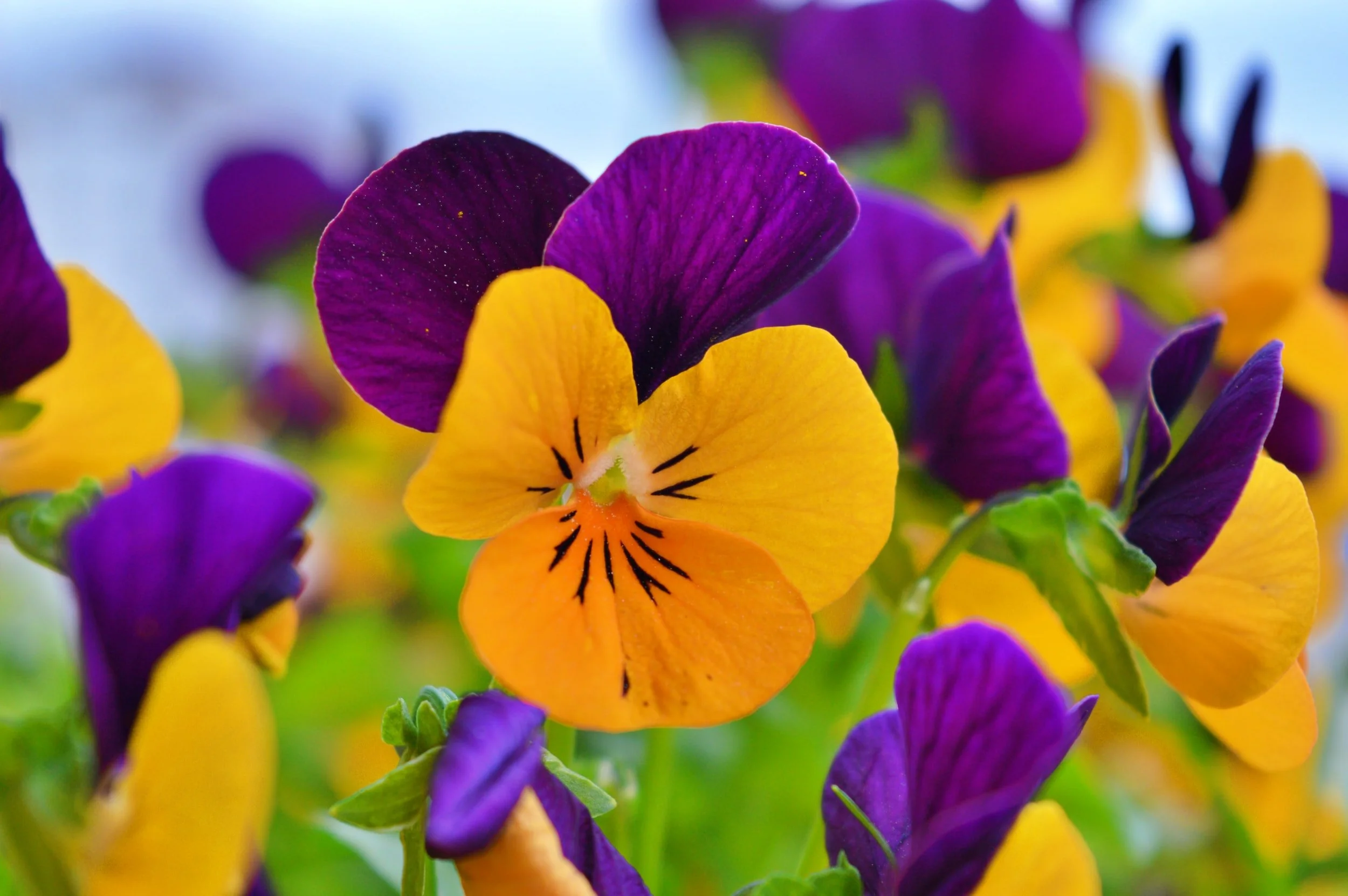
We began starting pansies inside a few years ago. Before that, I had never really considered starting them from seed. You just bought pansies in a flat from the garden store, along with petunias, impatients, and geraniums. But I ordered some on a whim and they worked! Which is pretty much my only criterion for adding something to our garden plan. If it works, it’s in. If not, well, it depends how much I wanted you in the first place. I tried to make sweet potatoes work for three years until Forrest, eating a piece of the world’s smallest, saddest yam, looked at me wordlessly. We both busted up laughing and that was the end of that.
But pansies work, so we grow them. They are such happy little flowers and they last! A lot of our flowers come and go with the season, which I understand, but I’m usually not up to redoing the whole flower garden in July, so it helps if the plants can carry over from spring into summer.
So this weekend, I’ll commandeer the girls for as much of the work as I can – they never mind helping make the soil blocks – and we’ll get to work. By this time next week we’ll be eating in the pinkish light of the plant stand and counting the days until we see the first tiny green shoots come up.

Institutions and Inefficiency
There are rough things, for sure – the aforementioned layoffs, and divorces, and bad diagnoses – but far more often, we see friendliness and fun, beautiful outdoor spaces and smiles even on the cloudiest of days.
I just wrote a long, beautiful blog about complexity in choices, in how systems and families are the same in that problems may seem obvious but solutions are not always that simple. And then the website froze as I was doing my finishing touches and since I’m a dope that hadn’t backed it up, that was the end of that blog post.
Oh well. It was probably a bit salty anyway, and overlong, and all the things that happen when I get on my high horse. Suffice it to say, don’t be a butthead about people working long hours for nonprofits or schools. What they do is far more complex than anything I do on a normal day, and they take care of people that society could often care less about.
But you wouldn’t know that from anything you read or hear, would you?
I spend a lot of time online. It’s a bit of a failing, I have to admit, but my leisure time comes in random unplanned 10 minute chunks and there’s only so much Candy Crush I can play. The online world can be a dark place, full of judgment and criticism, and even though I spend a lot of time there, I find it disconcerting that the real world seems so much gentler.
Especially because it’s not as if the real world feels particularly gentle these days. Layoffs have come around again and while our family is ok, there’s a very palpable sense of foreboding. Every so often I see someone I haven’t seen in awhile and there’s an awkward, “You guys ok?” sort of conversation. So far, most people are. But we’re feeling the precariousness of our lives.
In the real world, we get both the good and the bad. And as much as I love adorable cat videos, there is nowhere as much good as bad on the internet. It’s even worse if you watch local news. I often walk on the treadmill at the Y while my eldest does swim team and, if I believed the TVs in the cardio room, I’d fear to walk out to my car afterwards. But without that, I’d never know about the terrible criminals that are apparently lurking outside my door.
Instead, my life feels a little more like Mr. Roger’s neighborhood. There are rough things, for sure – the aforementioned layoffs, and divorces, and bad diagnoses – but far more often, we see friendliness and fun, beautiful outdoor spaces and smiles even on the cloudiest of days.
In that world that is so easily judged, those inefficient institutions – schools, nonprofits, churches – are full of people who are mostly just trying their best to make the world just a smidgen better. And too often, all I hear is criticism, mostly from people who don’t really seem to do much to help.
I know that I’m not discovering something new – these concerns have been expressed before, in much more eloquent language than mine. But maybe it’s worth repeating. The world can be a hard, messy place and we don’t do enough to appreciate those people who do their best to meet us there and make it just a little bit easier. We don’t thank them nearly enough.
Worms
I know there is a lot of science behind the aeration and fertilizing work that worms do, but to me it seems like a strange alchemy.
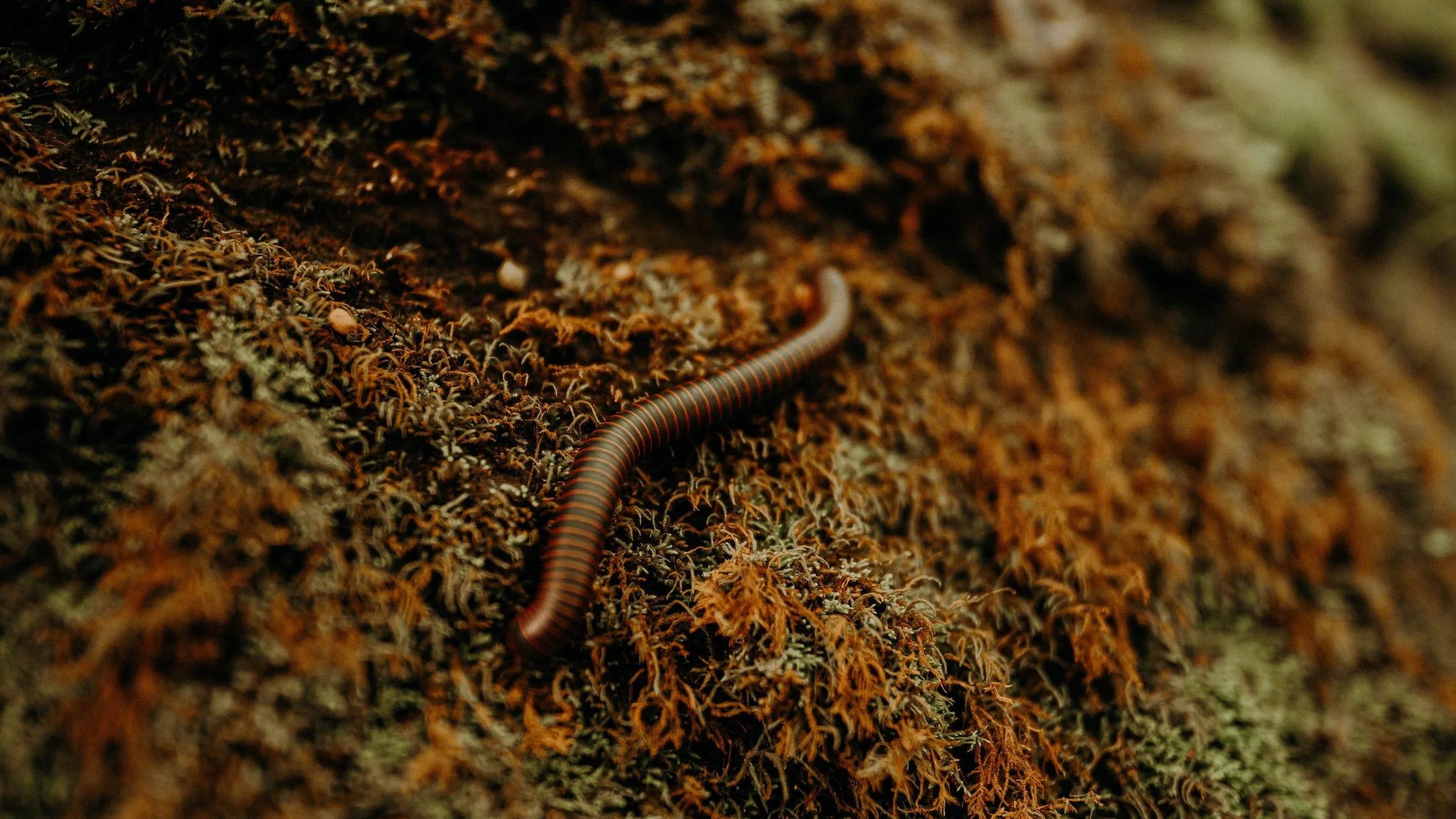
There’s still nothing growing here yet, so our gardens are looking pretty dead, especially compared to the green grass and towering firs throughout our neighborhood. The only sign of life from my gardens is the occasional worm who escapes onto the sidewalk on rainy days. My kids are well versed at helping worms back onto the grass, even though I’m never quite sure what I’m supposed to do with them. Will that help? Will that hurt? I should probably find out.
It will be time for putting compost in the soil soon, and although it’s a nasty job, I can attest to this: The worms love it. By April, when I start digging, the soil is positively teeming with worms. I’m happy to report that I have no aversion to creepy crawlies (with the single exception of when I saw a spider’s egg sac open and hundreds of teeny-tiny spiders float away on the breeze. That was not my most dignified moment). So I do my best to let the worms do their thing, moving them out of the way if I need to, but mostly feeling thankful that they’re there.
I know there is a lot of science behind the aeration and fertilizing work that worms do, but to me it seems like a strange alchemy. We put in trash - rotting trash - wait a month or so, and the worms turn it into beautiful black dirt. I also know there’s a lot more at play there between bacteria, fungus and insects, but worms are the part that I see and interact with the most.
Back when my eldest was in preschool, she learned about worms and their role in making dirt. They had a soil table filled with worms and the kids got to get their hands dirty and learn about one small step in how their food was made. I remember her coming home and us reading Richard Scarry and her realization that Lowly Worm probably ate compost and pooped out dirt. For her little mind, the idea was both fascinating and hilarious.
I have to agree. There’s magic there, and meaning too, if we look for it. The lowliest of creatures is the very animal that takes our refuse and turns it into something productive. Worms are overlooked and ignored but it wasn’t until we had a good colony of them that our garden started growing. I wonder how many people we overlook and ignore, at our own peril? How many small, unpleasant tasks we fail to appreciate until they aren’t done?
How many of us are working day in and day out, doing the little things that make life livable for the rest of us? I’m not saying they’re worms, although if I were in charge, that would be a term of honor - like a busy little bee or an eager beaver. Because, even when it looks like nothing is happening, when the gardens are brown and worn out, underneath? There’s an entire world, just waiting for spring.

Resentment and Reminders
When I end up empty, I keep going, pushing myself, but everything that was good and positive takes on a harder edge.
I’ve had to put myself on the clock today. There have been a million distractions and a million reasons not to sit down and do some writing and I admit that I am giving into all of them. It was a long weekend, in both senses of the word and starting tomorrow, there’s a rapid-fire series of events that will leave me hopping for sure. And part of me wants to cocoon with a book and pre-rest, even though I know that’s not a thing.
In my quiet moments, I wonder how I will muster up the energy to be all the things that my life requires me to be. And then, when the moment comes when I need to lead the meeting or chaperone the field trip or write the 90,000 words, I find it. I’m constantly amazed at my own ability to rise to the circumstances placed in front of me. It’s very reassuring, this knowing.
But it’s also a dangerous secret, because if I lean on my extra reserves too often, if I don’t refill that gas tank, then I end up on empty. I wish empty looked like a robot that ran out of energy. I wish I could just slow down and sink into a quiet corner. But that’s not how it is, is it? Because when I end up empty, I keep going, pushing myself, but everything that was good and positive takes on a harder edge.
I already have a pretty hard edge. I’m not the softest of people, but I mostly avoid the bitterness and resentment that a hard edged person can easily stumble onto. Unfortunately, when I’m out of energy, That’s immediately where I go. So quickly that it’s usually my first real sign that I need a break.
And that small seed of resentment can ruin everything. It can turn cooking a meal into an exercise in being unappreciated. It can change a trip to the park into a criticism-filled excursion. It can allow an act of kindness to become an act of self-importance. If I don’t stop it in its tracks, resentment and bitterness can take all of my work and make it ugly.
Iit’s so easy to think that I’m the only one out there working hard, only one cleaning up this mess, only one trying to make the world a better place. Rest alone won’t fix it, of course. The only fix I know is to realize that all this work I do - to care for my family, to volunteer, to write - it’s a choice that I make. The other choices would make me terribly unhappy of course, but I could choose them. People do.
Rest, however, gives me the space to remember that the choice remains with me. That no one is forcing me to cook from-scratch dinners or show up to the band concerts. And rest reminds me that I make these choices because my happiness derives far more from those things than from any hedonistic pleasure.
My eldest and I were out on a walk yesterday and it was cold, bitterly cold. She remarked that she likes going out on cold days. She responded with something like, “You get the benefit of the exercise, which is nice, and then the benefit of being back inside and warm when it’s over, and then the benefit of feeling really virtuous and good about yourself because you went out even though it was freezing.” She’s right. and today, I’m feeling the benefit of that virtuousness, for putting in the time, even though it required reminding myself that the choice was mine to do it - or not.
Cover Art
Maybe I’m condemned to spend the rest of my life getting myself into and out of scrapes.
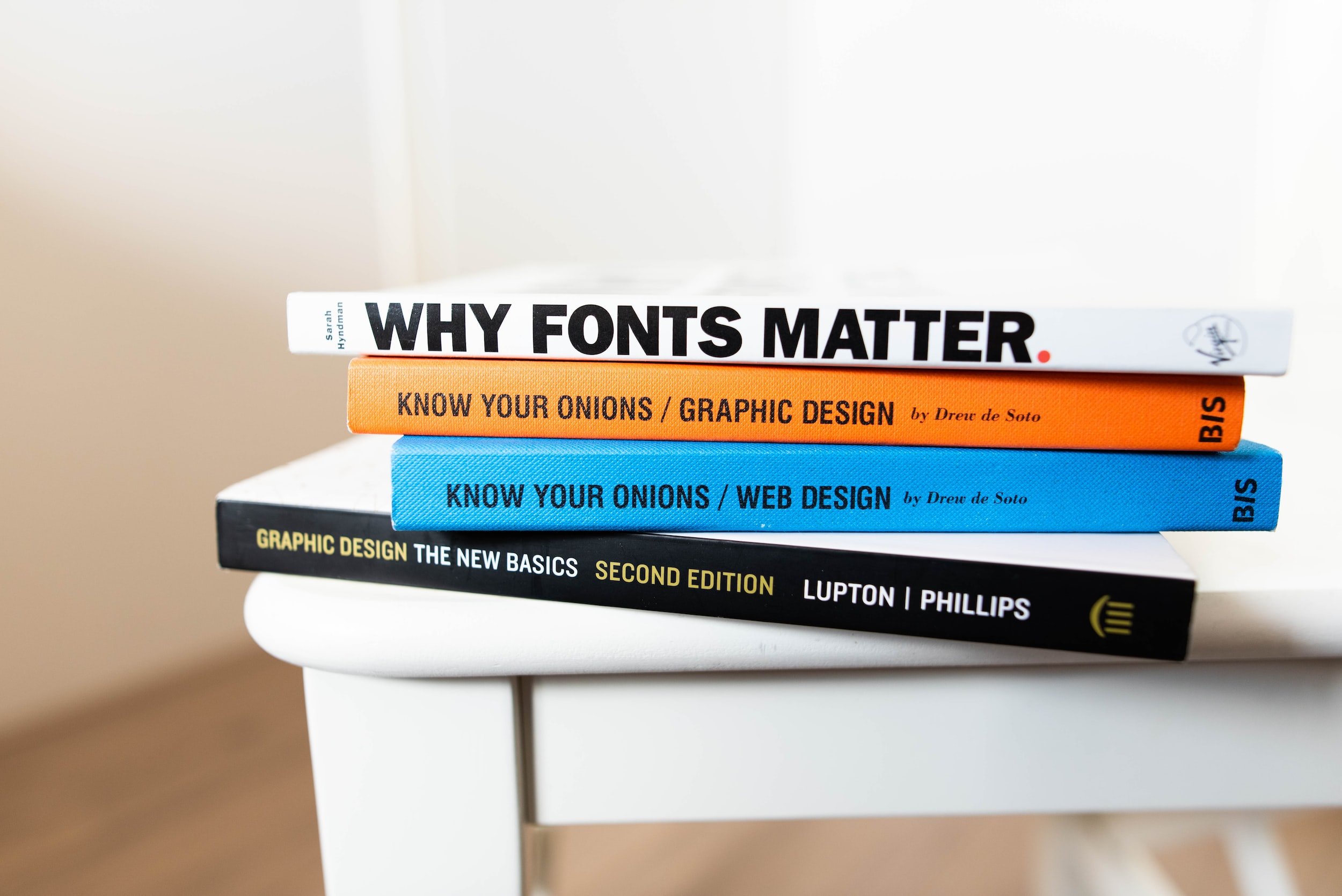
I’m nearing the final stages of revision on this book and it’s time for the parts I like least – proofreading, formatting, and cover art. I got into this whole writing thing because I like painting pictures with words. I like figuring out where the story will go and envisioning exotic places and most of all, never, never having to actually do any visual art of any kind. It’s not my forte.
Generally, I’m a “more is more” person. I want to buy all the pictures to hang on my walls. I want to use all the colors when I paint. I want to put all my ideas down. And when I’m writing, I can generally do that. (Or, I can put them into a second document to use for the next book!) But cover art is hard. You want to make it look interesting. You want it to have some visual appeal. You want it to have some relation to the story you’re telling. I can lay those things out and have absolutely no idea how to achieve them. Honestly, I should just hire one of the many qualified people who exist for this purpose. And, in the end, maybe I will. But unfortunately, I have a general “How hard could it be?” outlook on life.
This outlook has helped me achieve many things. Without it, I would never have gotten through college, let alone grad school. I would have given up the idea of ever becoming a parent. I definitely wouldn’t have taken on an amorphous semi-career while also spending way too much time volunteering and somehow keeping our family fed and reasonably well-cared for. I’ve written three (3!) books just because I never stopped to think that maybe I couldn’t.
At the same time, I’ve had more than one DIY project that involved stopping after about half an hour to actually look up the steps that I was supposed to be doing. I’ve bitten off more than I can chew more times than I can count, and poor Forrest spends a fair amount of his life helping me dig out of situations I impulsively got myself into.
I will say this, though. I have found myself far more capable than I would have imagined. And I am the kind of person who learns by doing rather than reading. So, maybe I’m condemned to spend the rest of my life getting myself into and out of scrapes.
So I’ll take a crack at the cover, try a few things and we’ll see how it works out. And in the end, maybe it’ll be better than I imagined. Or maybe it’ll be wonderfully done by someone who is very much not me.
Thermometers
If it’s a sunny spring day and I have nothing better going on, what am I supposed to do? Just not go outside and plant things? Impossible.
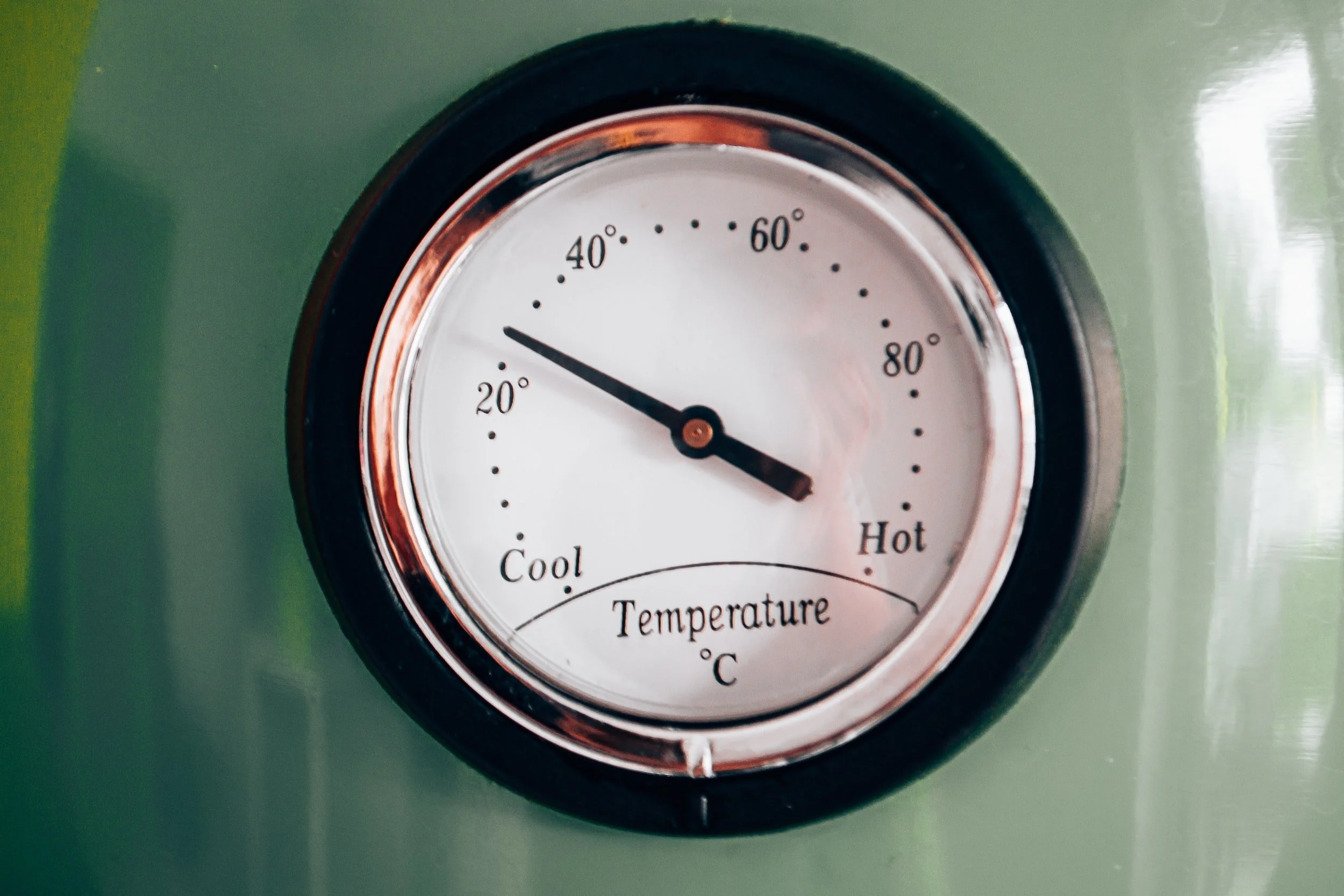
A few years ago, I bought a soil thermometer for our gardens. It was cheap, and I thought it might be useful to tell when the ground was warm enough for certain types of seeds to germinate. I’m not always the best at fall cleanup, so I ended up just leaving in the ground through a couple winters, and somehow it has disappeared.
I’m debating whether or not I should buy a new one. On the one hand, it get a little thrill of satisfaction when the spring weather comes and the ground starts to warm up. It’s like looking at the forecast and seeing only sunny days on the horizon. On the other hand, I don’t really use that information to inform my gardening behavior. I plant based on some vague calendar in my head, combined with my ability to find time in my schedule for a morning away from work and parenting.
It's funny, isn’t it? There is so much science that goes into gardening. The seed catalogs are full of statistics – average germination rate, days to germination, preferred soil pH, preferred soil temperature. And when it comes down to it, I plant based mostly on how I’m feeling and my past experiences. “Last year, we waited until April to plant lettuce, let’s do that again. But the onions held up nicely even in March, so let’s do that.”
I am sure that some of my gardener friends are cringing right now. Like most hobbies, gardening has two types of people: those that really love to follow the rules and those that don’t. I want to be the first type, I really do. And there is absolutely no doubt that if I listened to that soil thermometer, my plants would be happier and my yield would be better.
Buuuuuut…if it’s a sunny spring day and I have nothing better going on, what am I supposed to do? Just not go outside and plant things? Impossible.
And this is why I love having gardening as a hobby but not to make a living. There are a lot of parts of my life where I have to follow the rules, every single time, or else really bad things can happen. And it’s nice, sometimes, to look at the thermometer sticking out of the ground, telling me it’s too early for green beans, and then turn around and do whatever I want.
Haircuts and New Horizons
Nothing makes time seem to flow faster than when my children have experiences that I fully remember having myself.
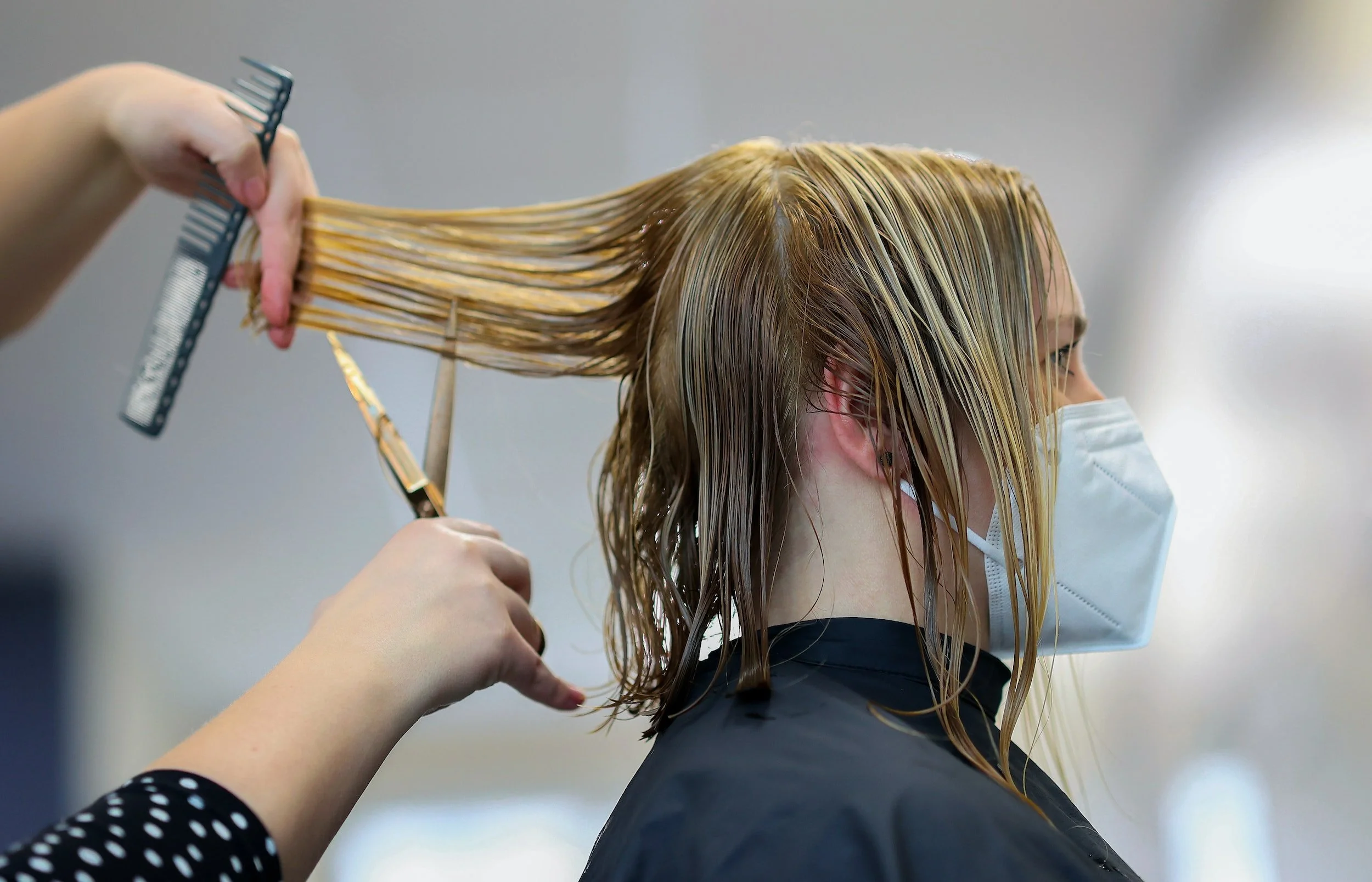
I’m getting my hair cut today. A few years ago, I found a woman who is wonderful and who will, for a price, give me a hair cut and color that requires exactly no work or thought from me. I am more than happy to pay that price a couple of times a year so that I don’t have to spend a single second thinking about good or bad hair days, about products or blow dryers. I’ve reached a point in my life where playing with my hair is no longer fun. I don’t want to change up my look. I want to get dressed and do about my day.
Maybe this is the beginning of middle age, then. Maybe this is the day that I admit once and for all that no outfit, no product, no service is going to remake me into a new person. I watch my daughters try on endless outfits and help them with endless hairstyles and it’s fun. It’s fun for me, it’s fun for them. But for myself, meh. Maybe for a fancy night out, I’ll put in some effort. But generally, no thanks.
That isn’t to say I don’t enjoy making an effort in other places. In the last year, I’ve learned to make custard and to decoupage and to fix toilets. I like to think I will never stop learning. I hope I will never want to. But I wonder what it is that has led me to no longer care about the newest fashions or latest looks.
Part of it may be that the new looks remind me a little too much of my high school days. Those baggy jeans and crop tops should stay in the past where they belong. Then again, I remember my parents saying the same thing about bell bottoms and paisley when I was in middle school. My kids and I joke that when I was a teen, all the grown ups tucked in their shirts, so now, when they tuck in their shirts, I think of them like miniature 40 year old ladies. Meanwhile, the current actual 40 year old ladies in my cohort don’t tuck in our shirts, because we wouldn’t want to look old and unhip. They roll their eyes at my untucked middle age-ness.
They have convinced me to try a middle part again. I’ve told them it will be the first time since 1998 that I won’t have a side part and they all agreed, it’s time. I wonder if I’ll look in the mirror, at a face that is growing wrinkled, and still see my 8th grade self peeking through.
Back in college, I took an amazing class that talked about relationships throughout the life cycle – everything from infants’ attachment to the grief when a long-term spouse dies. In it, they talked about how divorces don’t happen at random intervals. There are bumps in the data – significantly more people get divorced at year 7 of marriage than year 6 or year 8, for example. And, according the data available then, one of the bumps occurs when the eldest child hits age 14. The professor speculated a few reasons – teenagers are hard, parents staying together for the kids might think 14 is old enough to break up, etc. But one that she mentioned resonates with me now – having a teen child makes you feel old in a new and different way.
Nothing makes time seem to flow faster than when my children have experiences that I fully remember having myself. I don’t recall much of elementary school; a few snippets here and there – Disney world, Christmas, a field trip or two. But my eldest is going to her first school dance this week and I can tell you the exact layout of the gym at my middle school dances. The memories are clear. And a part of me feels closer to her age than my own. I know I’m not 20 anymore, but it feels like it was just yesterday.
Don’t get me wrong; I don’t want to be 20 again. I am remembering it with rose-colored glasses, for sure. When I went to college, my dad mentioned that he was jealous of all the fun I was going to have and cynical me retorted that he only felt that way because he knew how it was all going to work out. No stress about graduating and getting a job, about getting married and buying a house, about having kids and making it all work. It’s easy to look back there from here and see all the fun without any of the giant unknowns looming before us.
Still, I didn’t know then that this age would have its own giant unknowns. What am I going to do when my kids are grown up and gone? It’s 5 years until my eldest graduates. The twins will be two years later. How will we will fill the time? And then then even bigger unknowns. When will the day come that we get a dreaded diagnosis? Or get a phone call about a parent? Or? Or? Or?
So, I suppose my insistence on having easy haircuts and simple fashion choices maybe makes sense. I’m too aware of the fleeting nature of time and I have things I want to do with this second 39 years. And for me, hair ain’t it.
Ferns
I will turn to houseplants for inspiration. Which means I must be really desperate because everyone knows that my house is the place where plants come to die.
We’re in the boring part of January where the weather is starting to stabilize and even get a bit better, so I’m eager to start planting. Forrest spends most of January and half of February shaking his head at me, telling me it’s too early to start seeds inside, the ground is workable but a frost could still come, and one sunny day does not make it spring. That’s the problem of living in Seattle. There isn’t much difference between February and May, so it’s easy to mistake one for the other.
Nevertheless, I will turn to houseplants for inspiration. Which means I must be really desperate because everyone knows that my house is the place where plants come to die. I have killed more houseplants that I can count, and even now, on my counter there is a dead bromeliad, a jade plant with one sad stubby stalk, and the world’s hardiest spider plant. It’s frankly embarassing.
I forget to water them. Or I water them too much. I don’t clean my windows so the sun is not great. The cat gets up there and eats whatever she can. Outside, plants seem to love me. Inside? Not so much.
Except.
Except.
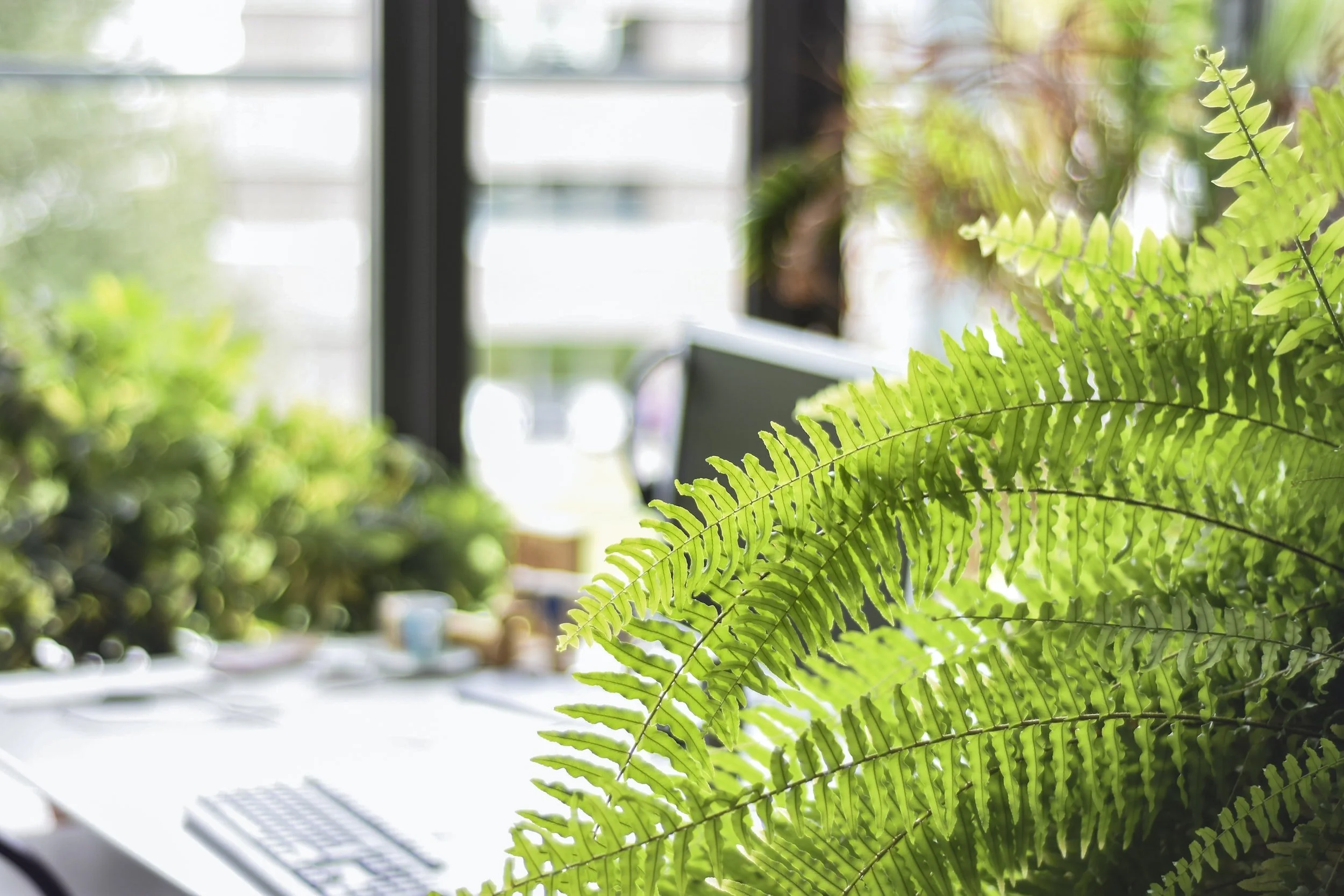
The fern in my bathroom.
We redid our bathroom about 5 years ago to get rid of some water damage and dry rot. I did it up nice and at the time, I wanted something that would accent the teal and white theme. So I got a Boston Fern. My thought was - it’s humid in the bathroom, so I won’t have to worry about watering. It’s dim in there, but ferns are good with shade. And most of all, I’ve killed a lot more expensive plants, so how much could it hurt?
And that fern is so happy. I don’t know if my kids secretly water it or if my “humidity” plan is working, but it has outlived my greatest expectations. It makes me so happy. There is just something soothing about a well-grown houseplant, isn’t there?
And ferns are one of my favorites. They’re hardy and bushy and green, and I do absolutely no upkeep for it, so they must be low maintenance. Around here, ferns grow in every spot they can find, so I think my bathroom fern gives off a little Northwest-y vibe.
But that fern is perhaps overinflating my sense of competence. Yesterday, I told my daughter that since apparently our bathroom is so wonderful for ferns, we could step it up to an orchid next time we’re at the garden store. I think she’s still laughing.
Toys and Talents
The only problem is that we still have kids living in this house. They are both the reason for and the greatest obstacle to organizing.
Over the last few years, Forrest and I have been undertaking an effort to organize our house. The two of us are pretty good at organizing our lives - dinner gets made on time, appointments are scheduled, meetings are attended - but our home can be a different matter. Part of it is that I, personally, like clutter. I understand the “there’s too much stuff” crowd, but it’s not for me. I like knickknacks and special dishes we only use once a year and pots full of half-dead flowers. It all brings me joy.
The other part of it is that our house has no wiggle room. There’s no basement, no upstairs spare bedroom, no laundry room where we can hide everything. Every single room in our house is used for most of the hours of the day. But all that use means no room for the regular stuff, let alone extra. We’ve started talking about our house like a cruise ship - how can we maximize every single inch? We’ve got the cabinet organizers and the room dividers and the bins labeled, but there are just days where close living is a little too close.
Those days are almost always in late January. It’s dark and wet and cold and there is no more Christmas to look forward to. So we’re trying to organize our house, to have a little more room to stretch out. This is great, in theory. The only problem is that we still have kids living in this house.
They are both the reason for and the greatest obstacle to organizing. I’ve taken to sorting bins of dolls and clothes late at night, lest some child wander in and rediscover some toy they haven’t asked after for five years. I know that some parents have their kids help with this process, to teach them how to manage possessions properly. I figure, between having rules on homework, housework, and, well, not assaulting each other, I’ve earned one area of parenting where I can take the easy way out.
Forrest and I have very different philosophies on the importance of permanence, both in possessions and residences. He was raised in the same house from age 1 until his mom sold it about 10ish years ago. Me? I spent my teenage and early adult years hopping from apartment to apartment, spending summers couch-hopping or, in one ill-advised move, renting a basement room at an unoccupied frat house. (I woke up to a mouse eating my Special K, which was the day I realized that I luckily not that squeamish about rodents.)
I’m all for keeping the special things - the art and stories and baby clothes that are the detritus of a life fully lived. But I have a limit about the number of TY dolls I can keep around. Meanwhile, Forrest is basically a depression-era grandmother, hoarding cardboard and foil in case it comes in handy sometime. He loves nothing more than when I ask him for a spare jam jar. He smiles smugly as he leads me out to his secret stash in the garage, and I roll my eyes.
We’re well-matched, he and I, but part of that is realizing that I should do the sorting and he should do the disposal. I’m liable to put it in a box marked “Give Away”, move the box out to the garage, and then promptly forget about it for the next few years. I lack follow-through. I’m moving into my forties next year and one of my goals is to reach out to the next decade clear-eyed. No more trying to be something I’m not or making excuses for what I am. I’m good at deciding what should stay and what should go. He’s good at making sure the stuff gets there. Let’s leave it at that.
Maybe that’s the secret - finding the people who can do the things we can’t and accepting that needing that help isn’t a failing. It’s fortunate. Nothing binds us together like a shared project, and people love knowing that they can give each other something of value. Even if that something is having no qualms about throwing a broken dollhouse in the trash.

Revisions
It’s hard, this job that doesn’t feel like a real job. And having a significant portion of that “job” be sitting and imagining, well, I might as well pack it in. There’s no grindstone here.
I’m going through revisions for my World War I book, reading through all the things that don’t make sense or maybe I changed halfway through the book and forgot to double check, plus the typos and stupid mistakes that persist in a 90,000 word manuscript no matter how many times I read through it. It can be a pretty demoralizing process, but one in which I have been delightfully surprised at my own conscientiousness. I’m also in the middle of a new manuscript, one that is all jumbled and broken and I keep pausing and wondering if maybe I should just start over and, well, it’s at least nice to know that past Serenity actually checked to see if they carried revolvers or pistols in the British Expeditionary Forces.
It’s a little window into the slow and halting process that I went through, a little over a year now, trying to make sure I got it right. There are so many things I would change, so many little and big tweaks that I could switch, but I don’t know if it would help or hurt the story, so I don’t. I once read that Dostoevsky rewrote Crime and Punishment three times, in first person, third person, and third person privileged. At the time, I thought, “That’s wild!” and now I wonder if maybe that’s just what it took.
There’s this American thing about work ethic, nose to the grindstone, hustle culture and all that. I hate it so much, not least because I have been in both creative and non-creative professions and I’ve found that all work and no play doesn’t make Jack a dull boy, it makes him make increasingly poor decisions due to exhaustion. When it comes to writing, there is a limit to what any person can achieve, unless they’re Stephen King on a coke-fueled binge in the early 1980s, of course.
Even some of the most prolific authors I know talk about spending 8 hours writing, but include sitting and staring out of a window or going for a walk to be part of that writing time. It’s hard, this job that doesn’t feel like a real job. And having a significant portion of that “job” be sitting and imagining, well, I might as well pack it in. There’s no grindstone here.
So there’s relief in the revisions. Look! All of those days spent thinking and typing, it’s here! That two hour rabbit hole where I looked at pictures of mess kits to figure out if they would use a bowl or a cup for soup? It mattered! And maybe, when I switch back to my current mess of a manuscript, I can remind myself that I won’t remember how messy it was, just how much fun I had writing it.
Passports and Pettiness
I’m enough of a student of history to know that there was no one perfect time in our history where everyone came together and created a new and beautiful world. People are people.
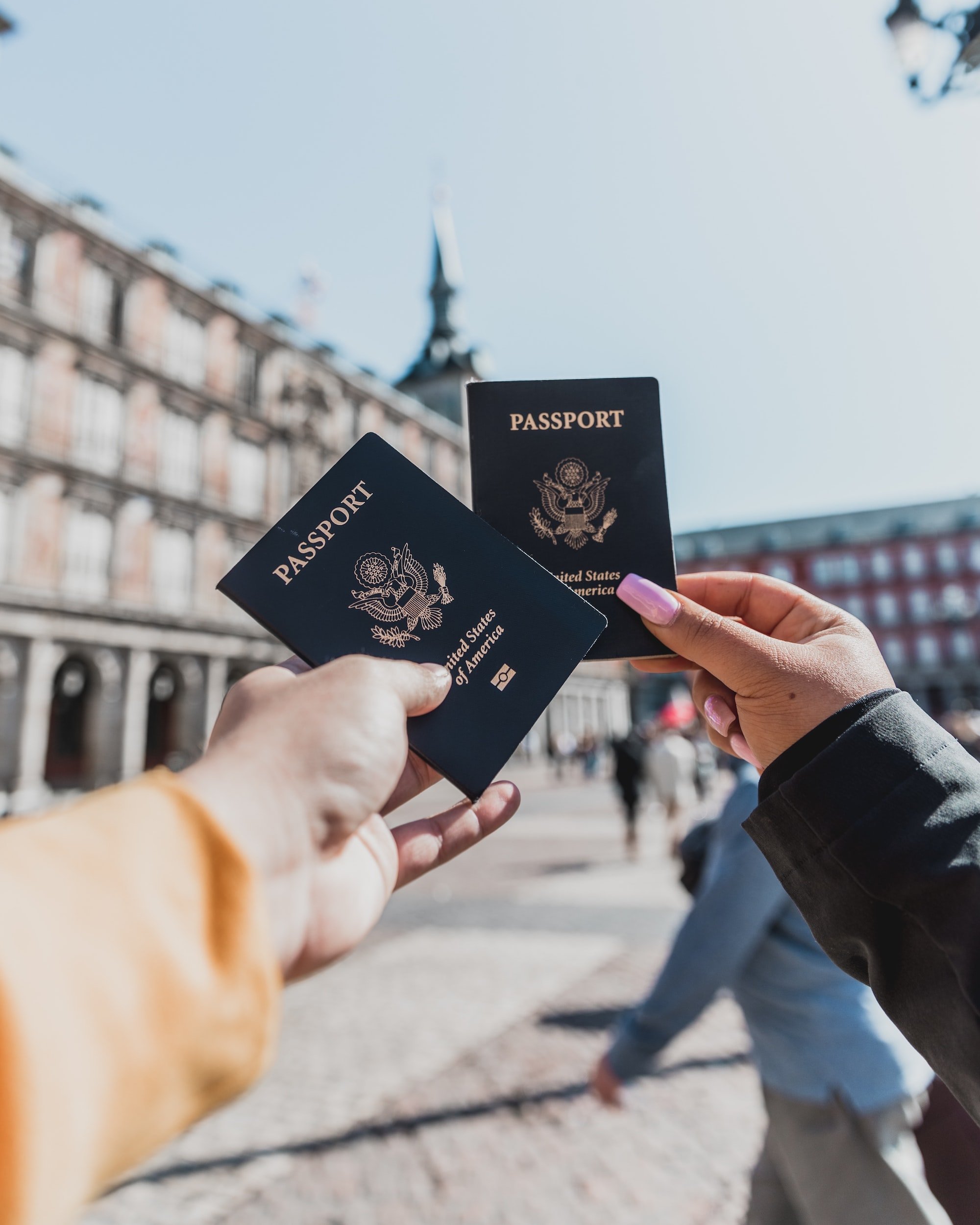
It’s time for me to renew the twins’ passports again, and after an hour of navigating the various forms, photocopies, and proofs of identification, my brain is feeling a little mushy. Even more complicated was finagling an appointment at one of the dozen local passport processing facilities. I’m not saying it was harder than getting Taylor Swift tickets, but I definitely had to set an alarm to snag one.
On the application, they ask for your international travel plans. As of now, the twins don’t have any, so I feel a little odd being so aggressive about getting this renewal. But something about the pandemic and the feeling of being trapped has intensified my wanderlust. For a lot of us out here on the west coast, we were far, far away from family, with no way to easily drive to get to them. More than once, I looked at google maps, at the 2,500+ mile journey, wondering if there was some way we could manage it with three kids and two dogs. People do, I suppose.
We didn’t. We stayed put and made the best of it all and flew with ridiculous precautions and now, I don’t want something as small as a passport to stand between us and the freedom that I used to take for granted. I sometimes think about the little changes we’ve all made that will stick with us forever. In 50 years, my kids’ grandkids will laugh about their crazy grandma who keeps some masks and extra toilet paper on hand, just in case.
I am so sick of talking and thinking about Covid, but it’s still there, in the back of all of our minds, and being sick of something doesn’t mean that it’s not affecting me anymore. We got a letter from the girls’ school district last week because they’ve both missed 7 days of school this year, 5 of them because of our family’s travels. It was the usual reprimand letter, “remember how important attendance is, etc.” and my first thought was how the district had no problem forcing me to give up my time to do e-learning for a year, so maybe a week off for a trip isn’t that big a deal in the scheme of things. I don’t like that bitterness. But I also didn’t like being seen as expendable, as someone who would pick up the slack when our society decided to shut down.
I suspect I’m not alone. There are a lot of us who just want to move on, but who have to reckon with new realizations over the past few years. I feel like we’re cleaning out the fridge, opening up the tupperware containers, and discovering all sorts of rot. Unequal divisions of labor, check. Disregard for the health of our poorest workers, check. Societal unwillingness to sacrifice for the greater good, check.
Don’t get me wrong - I’m not hearkening back to a golden age. I’m enough of a student of history to know that there was no one perfect time in our history where everyone came together and created a new and beautiful world. People are people. We’re all driven by a thousand motivations, both petty and pure. And the goal is to find the beauty in the good and the strength in the bad.
Still, there lies within me the desire, sometimes, to just escape it all. To go to a new place, with problems that are not our problems, with debates that are not our debates, and to do nothing more than let the difficulties at home settle for awhile. And hopefully, come back refreshed and renewed to set aside my pettiness and get back to the hard work of building a society that, if not beautiful, is at least a little more honest and true than it used to be.
Onions
They’re the Toyota Corolla of vegetables. Solid, steady, reliable. And I do appreciate them, but not nearly enough.
Every year, when Forrest and I decide what to plant, he says, “We don’t need that many things - let’s just plant lots of what grows well that we like. So, like three things - potatoes, onions, garlic.”
And then I roll my eyes and say, “What about cucumbers, and green beans, and peas, and carrots, and swiss chard, and lettuce, and…”
He always responds, “Oh yeah.” I know that he mostly wants to decrease complexity, to make our gardening lives easier, and (probably most of all) keep me from using gardening space to try to grow watermelons which will absolutely never work in our climate. And he’s right. If I were going to grow three things for the most yield and ease of gardening, it would be potatoes, onions, and garlic.
They can all be planted pretty early, making the season nice and long. They hang out under the ground, which means that I don’t have to stress too much about weeding them. They’ll keep down there for awhile, too, so I can harvest at my leisure. And they store well. I have never had to throw out a single onion because it didn’t get used up.
But let’s admit it, they’re a little bit boring. I don’t notice a huge difference between storebought and homegrown onions, unlike tomatoes or carrots, where it’s night and day. And I do appreciate having extra onions right out there in case I run out, but we’re not exactly eagerly awaiting the harvest. I don’t have to shoo my kids away from the onions they way I do with green beans or cucumbers.
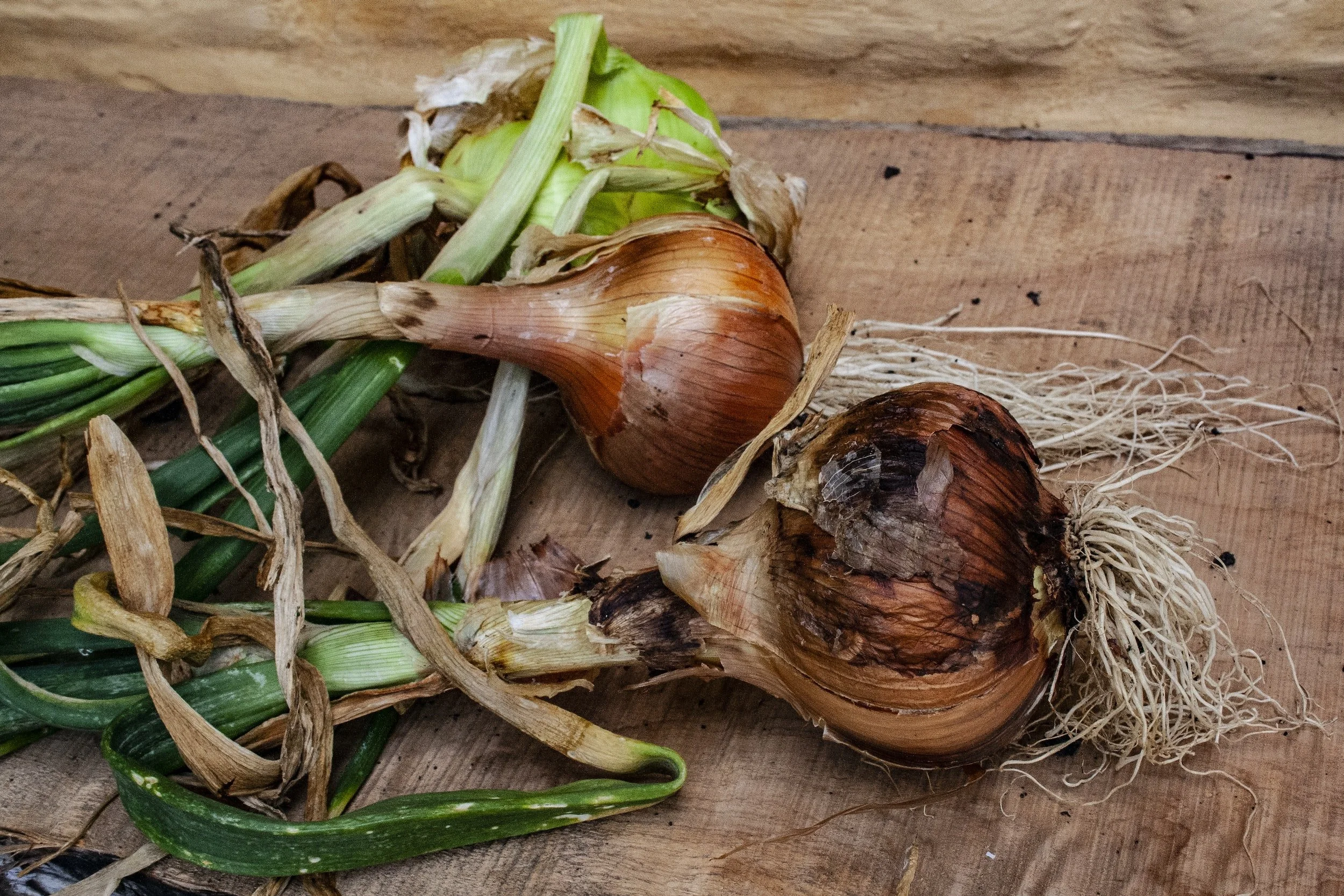
They’re the Toyota Corolla of vegetables. Solid, steady, reliable. And I do appreciate them, but not nearly enough. I should appreciate how early they come up, making my garden feel fruitful long before the curcurbits have deigned to germinate. I should appreciate how happy the sight of an onion braid makes me, hanging in my garage. I should appreciate how they don’t attract slugs or bugs or mildew or anything else. They keep themselves to themselves.
For some reason, it’s the finicky plants that grab my attention. The ones who give me the dopamine rush, who can let me down year after year but still keep me coming back for more. (It’s good that I have this gardening thing going on, or you might find me down at the horsetrack.)
So, this year, I’m going to make an effort to give my onions a little more attention. Weed them a little more often and get them out of the ground in a more timely manner. It really is the least I can do.
Seeing and Being Seen
It’s like eating skittles when my body needs a meal. I don’t feel hungry anymore - in fact, I feel amazing! — but my body is still undernourished.
I feel like I am taking a big exhale this week. For the first time in a long time, I’ve got a normal week with nothing extra, nothing added. And it feels amazing.
I once read a joke - “Adulthood is just saying, ‘After this week, things will calm down,’ over and over until you die.” I feel like that’s my life. It’s not even my own projects, which wax and wane, but the weeks where there are meetings and field trips and appointments, not to mention the unforeseen things like plumbing and sicknesses and playdates that crop up. It can all feel crowded in sometimes, and a week without them feels like having a king-size bed all to myself. Space to stretch and rest.
I’m reading a series of memoirs by Madeleine L’Engle right now, and she spends a lot of time talking about the time before she sold her first book, a period of her life that she calls “The Tired Thirties.” She talks about being torn between her unpaid, unknown writing, her obligations to her family, the expectations of being a housewife in the 50s, and her volunteer work at her village church. Replace the “housewife in the 50s” with “modern parent in the 2020s” and it feels incredibly familiar.
In it, she talks about how in her moments of despair, she thinks to herself, “Is this all I’m good for? Running a little choir at a little church?” And then, of course, she talks about her own understanding of the real meaning and value of that little work. But I confess that my own brain has thought those words before. “Is this all I’m good for? Sending a million little emails? Folding laundry and then refolding it again next week? Schlepping my kids from one place to another ad nauseum?”
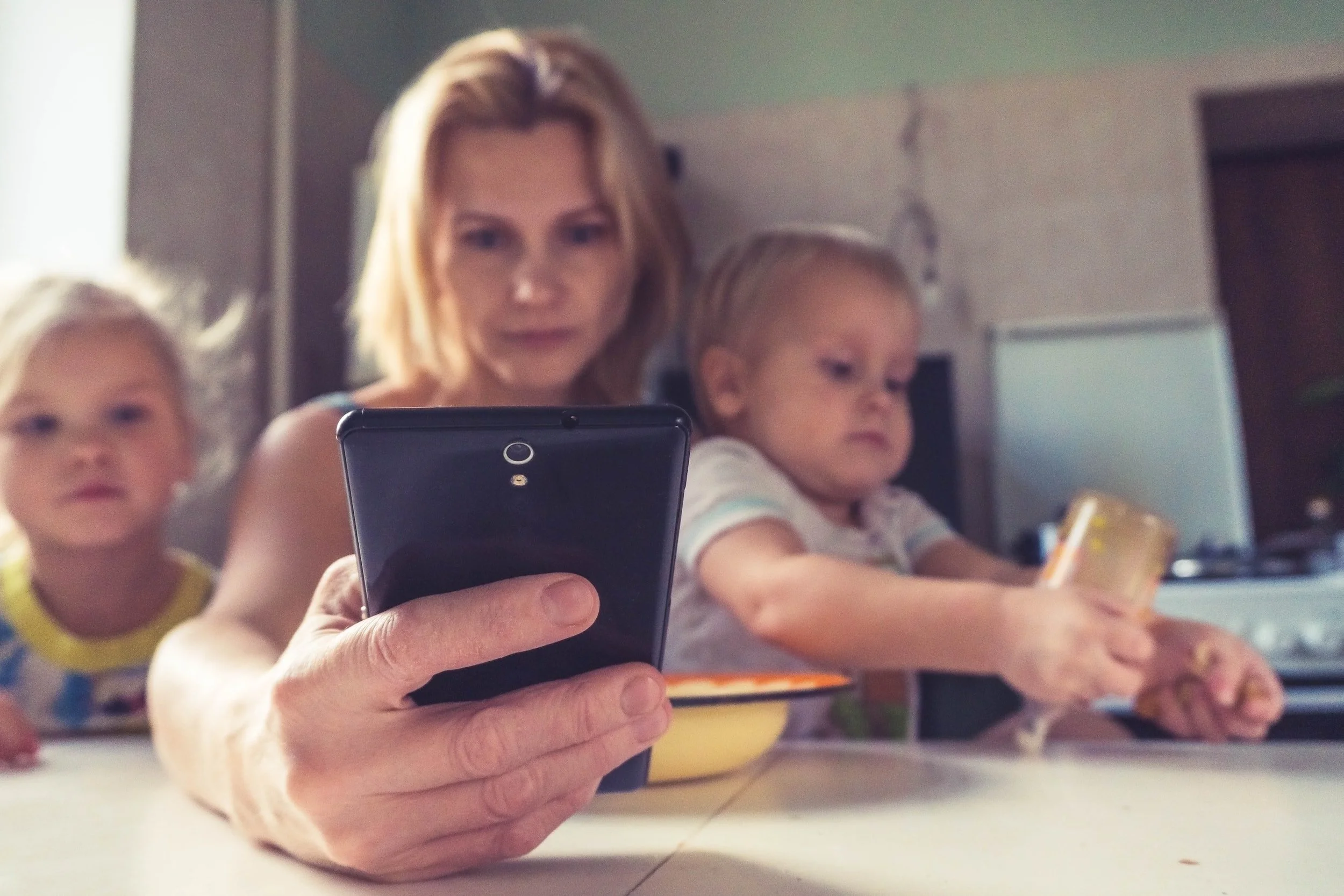
It’s important to me that we allow ourselves to sit in that frustration, that agitated state, for a while. Because what it speaks to is a feeling of being unvalued, unappreciated, unseen.
I think a lot of people in this world just want to feel seen., but they don’t admit it to themselves. They don’t want to acknowledge that they’re lonely or isolated, and so it comes out sideways, at odd times and odd places. A lot of people talk about random meetings with strangers where deep moments happen and every time, I recoil. I feel like a monster when I do but all I can think is - who is following up with that person? When someone shares with me how rough of a time they’re having, I want to check back in. When it’s a friend or a family member, I can make sure to call them in a week. But when it’s just in passing - on a plane or in a doctor’s office - there’s nothing I can do beyond that moment. They are just as alone as they were before we met.
I’m all for miraculous moments, but the reality is that most people who are going to be that vulnerable with a stranger need much, much more than a stranger can give them. They need a friend. That beautiful moment might alleviate their isolation but it’s not going to cure it. It’s like eating skittles when my body needs a meal. I don’t feel hungry any more - in fact, I feel amazing! — but my body is still undernourished.
I say this because I’ve been this person, when I was at home alone with a colicky baby, on a coast far away from home and support, with a husband that was doing his best but still left for 11 hours a day. I have so needed to feel seen. I remember that feeling and it was gut-wrenching. I dream about going back in time and hugging that woman, about telling her that it will all be ok. That my need for reassurance and support were not signs of weakness; they were signs that part of me was still up and fighting.
But I could only start getting those needs met when I was honest about them. It’s not sufficient of course - there may still be barriers to feeling seen — but it is necessary. We don’t need to be seen by strangers - we need to be understood by friends. We need the company of people who are going to walk through our whole lives with us, through the Tired Thirties and beyond. We need them to keep us going when we fall into self-pity and despair.
I think the moments of despair that L’Engle talks about are the moments when we, if we’re lucky, realize that the question contains the answer. “Is this all I’m good for?” The answer is yes - but not because she is not good for anything else, but because the work itself is good. The small moments that add up into a lifetime of being seen and seeing others. The daily in and outs that receive no acclaim but build the foundation for a life well-lived. The stability and support of a family that helps children grow up resilient and secure. These things create a life that can feel overfull with obligations, but also with meaning.
If that’s all I’m good for, I’m more than happy.